The quarter around Palazzo Colonna, and why the nobility built here
The ground between two powers
Rome’s baronial families did not scatter. They built where the two things that mattered met, and in this quarter those two things are the papal palace on the Quirinal above and the road running down to the Capitol below. A house on that slope sits between the court and the civic centre, on the way from each to the other.
That is the whole answer to why the address is worth what it is worth, and it is a medieval and early-modern answer rather than a modern one. It has nothing to do with views, restaurants or fashion, and everything to do with who had to walk past your door. The Colonna have been on this ground since the 1200s, which is long enough that the reasoning predates most of what surrounds it.
Via della Pilotta and the bridges over it
The Via della Pilotta side of the palace is crossed by covered bridges linking the building to its own garden on the Quirinal slope. It is the single most photographed thing about the exterior, and it is in fact a private passage between a house and its garden rather than a piece of civic architecture.
It also explains the shape of the visit. The gardens sit uphill, behind and above; the gallery is in the body of the house; and the bridges are how the two were joined without the family ever crossing a public street. The route takes the rooms first and the gardens last for the same reason.
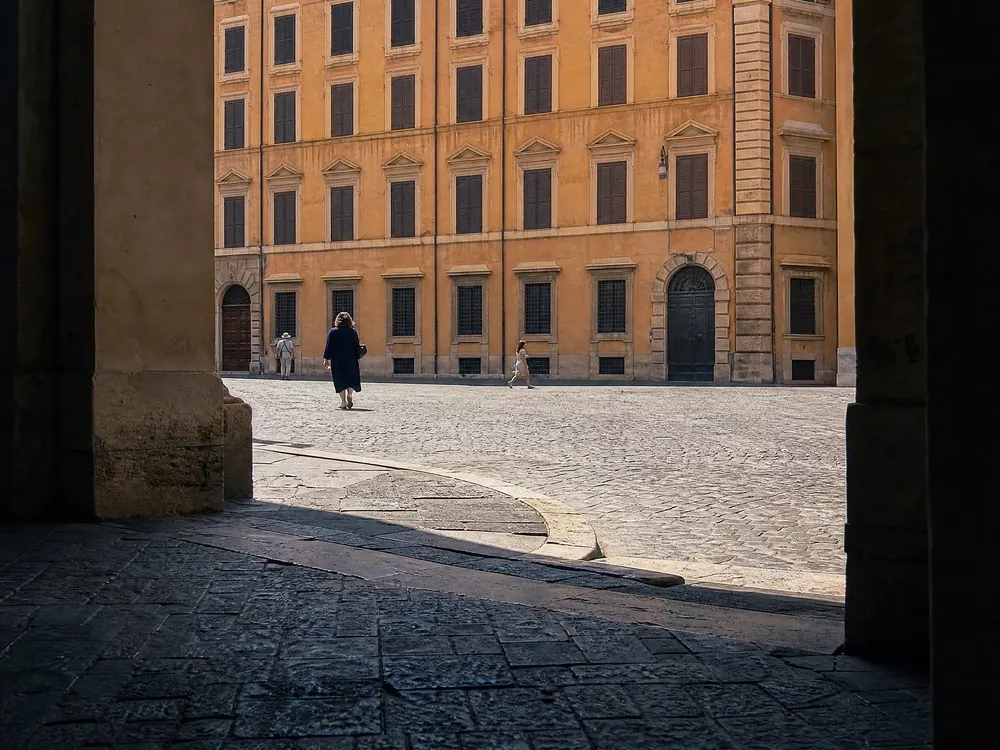
Three related questions, and the answer beneath them
Three searches land on this page wanting something else: which street in Rome is the prettiest, where the rich live, and which neighbourhood is nicest.
- The prettiest street is a matter of taste, like the question on the most-beautiful page.
- Where wealthy Romans live is a private matter.
- Where to stay depends on your plans.
What the quarter can tell you is the historical question underneath all three: why this ground, and not another. That has an answer and it is above.
What being here does to the visit
Practically: you are already close to it, whatever else you have planned. The palace sits between two of the busiest points in central Rome and admits people for eight hours a week, so the constraint is never distance and always the calendar. Getting there has the two doors — Friday is Piazza SS. Apostoli 66, Saturday is Via della Pilotta 17 — and visiting has the hours.
Walk the Via della Pilotta side before you go in, even if your door is the other one. Five minutes outside, looking up at the bridges, makes the gardens at the end of the route legible instead of surprising.
Read next
Frequently asked questions
What neighbourhood is Palazzo Colonna in?
The Rione Trevi, between Piazza SS. Apostoli and Via della Pilotta, at the foot of the Quirinal — a few minutes on foot from the Trevi Fountain and from Piazza Venezia.
Why did Roman noble families build around the Quirinal?
Because it is the ground between the papal palace on the Quirinal hill and the road down to the Capitol. A house on that slope sat between the court and the civic centre, on the route from each to the other.
What are the bridges over Via della Pilotta?
Covered bridges linking Palazzo Colonna to its own garden on the Quirinal slope. They are why that street is photographed as often as it is.